

We had an original idea. Or so we thought. Not a good idea, for sure, but at least a new one. And one teachers hated.
We called it the Slam Book, an ordinary-looking spiral notebook we passed among ourselves when teachers turned their backs to write on the chalkboard.
The keeper of the book wrote questions on the tops of pages—questions like Who looks like a hippo? Or Whose breath stinks? Or Who’s the stupidest kid in class?
The book didn’t land often on some kids’ desks, maybe because our names were on too many pages.
People had always been mean. I’d known this. But I doubted anyone had found such a wily way to show hate.
Turns out I was wrong.
The Romans beat us to it, having invented curse tablets nearly twenty centuries before.
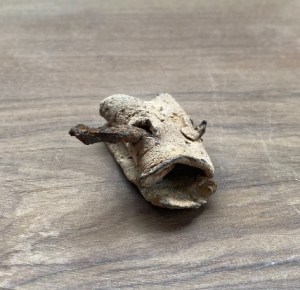
Inscribed on small, rolled-up lead plates and buried with the dead, their comments were more threatening than ours:
May the worms, cancer, and maggots penetrate.
May he botch his performance in court, forget his words, become dizzy.
I curse Tretia Maria and her life and mind and memory and liver and lungs mixed up together, and her words, thoughts, and memory.
To make the curses even more powerful, they were written backwards and the tablets pierced with an iron nail.
The Romans weren’t messing around. But then, neither were we. In the middle school scramble for status, we tried to move up the social ladder at the expense of others.
Curse tablets and slam books—same function, different tools.
All through the years, platforms have changed—graffiti on city walls in Pompeii (Atimetus got me pregnant.), pamphlets published by the newly-invented printing press (Even brutes do not devour their young.), scandal sheets (the Prince Regent, a blockhead), and fast forward to the insults on Facebook, Instagram, Snapchat, and Twitter.
It seems that a mean streak runs through.
But so does the good.
“Grace be to you and peace . . .” a Roman once wrote.
“I don’t do slam books,” my classmate told me.
And my young friend on Facebook uses her birthday to raise money for digging wells.
Good and evil—neither is new. We make choices in every age.
 Apple to Apple