
You wouldn’t think a stack of catalogs could hold so many memories.
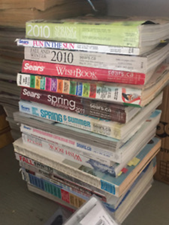
“I’m ready to give them away,” my mom said when we found them under the eaves of her attic.
But not without some stories. And what amazes me is how the Sears catalog has woven its way into my mother’s daily life.
Way in.
It’s pages used as toilet paper, for example.
“I’d get in trouble,” my mom said, “for staying in the outhouse too long. It was more fun to leaf through catalog than to do dishes.”
With summer, spring, fall, and winter editions, new 1000-page catalogs kept showing up the in the mailbox. Beyond the outhouse, these “Big Books,” as they were called, served as booster seats and doorstops. Their pages were torn out to clean windows and sometimes crumpled up for insulation in walls.
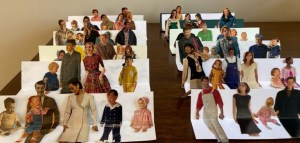
My memory doesn’t stretch back to a catalog in the outhouse. But some of this story comes down to me. I sat on a stack of catalogs at my grandma’s kitchen table and folded their pages to make doorstops. And my own attic holds scraps from old Sears catalogs—paper people cut from their pages.
I spent hours naming these people, assembling them into families, and seating them together on church benches made from folded catalog pages. My favorite was a little girl named Karen, who wore a pink coat with a pink, lace-edged cap
Times have changed. Sears is almost gone. Big Books no longer land in mailboxes four times a year, Sears stores no longer dot the country, and the eaves of my parents’ attic are now emptied of catalogs.
But the Big Books they saved all these years still hold value. They’ve found their way to my daughter-in-law’s university classroom, where she uses them for sociology exercises, helping her students uncover stories of the past.
 Apple to Apple