
Just when some kids need to talk most, they clam up. When they sense danger, they retract to somewhere inside. And the more you probe, the tighter they lock their shells. And this isn’t good.
Like you, even small kids can have big feelings. Threats cause fear or embarrassment or anger to sweep over them. And the amygdala in their brains triggers their first instincts—to flee or fight or freeze. This all happens to you, as well. But you have something kids don’t have—a fully-developed frontal cortex. Here’s where reasoning and decision-making and planning happen. This part of your brain helps you talk down your fear and bring logic into the mix.
This is why your kids need you. To do for them what their brains are not yet ready to do.
If kids aren’t the clamming-up type, you don’t have to guess their feelings. You know they’re mad. They’ve got plenty to say, and they stand there and fight. By keeping cool and playing it right, you can gradually bring some sound thinking their way.
But the clamming-up kind flee into their shells and then freeze. You’re left only to guess.
Poking around doesn’t help. Like the clam, they tighten their locking muscles. So how can you find your way into the shell?
I’ve found it works better to go in the backdoor than to pound on the front door. My favorite strategy is called joint engagement, which is just a fancy term for sharing a moment where you focus on something together. Maybe it’s a jigsaw puzzle or a bike ride. Maybe it’s doing the supper dishes or weeding the garden.
“I remember being full of dread once,” you might say as you pull out a dandelion root. Without looking at the kid, you tell a simple story. Then, just let it sit.
Or read a book aloud together. Books like Roll of Thunder and Number the Stars and the Narnia series show kids who have at the same time deep fear and strong resilience. In someone else’s story, kids can discover themselves. They are given a vocabulary to express their own embarrassments and fears and angers. With the focus off them, they might relax enough to open their shell.

 But my favorite Cooties game came from a box. With this dice-rolling table-top game, we tried to be the first to build a cootie—on purpose and piece by piece. Our cooties, when built, had heads, antennas, eyes, mouths, and six legs each.
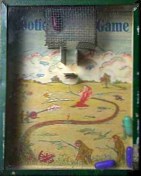 Kids played the earliest version of cooties during the 1918 Pandemic when perhaps a third of the world’s population was infected and children were particularly vulnerable. They played later versions during the last smallpox outbreak in the United States in the late 1940s. And like me, they played it in the 1950s when the polio epidemic put their cousins onto crutches and into iron lungs that kept them breathing.

