
Camps are closing and fairs and family reunions, and the playground down the street seems fraught with hidden danger. Even that golden feeling of freedom on the first day of summer has been tarnished. Away from their friends and go-to-school routines for several months now, kids have already been languishing around the house wondering what to do next. And now the long summer looms.
How can you help kids make this summer good—to reach toward goals and to fight monotony? Here are two strategies that can help:
- Routine—It may seem counter-intuitive, but daily habits can set kids free. Routine makes kids more efficient, bringing order to their surroundings. But it does more. Regular, repeated practice strengthens the brain. Kids play violin better, read faster, and solve problems more quickly.
I liked to tell hard-working students about the layers of myelin they were building up on the brain pathways.
“The more layers of myelin you put down, the easier it will get,” I’d say, “At first it’s like you’re traveling a muddy road. After a few more tries the road will change to gravel and then to pavement. And after a while, it will feel like you are gliding on ice.”
“If I could convince parents of one thing,” I’ve heard math teachers say in repetitive litany, “it would be to have their kids practice math facts every day all summer.”
Fact fluency, these teachers said, was a huge predictor in later math success. After all, students didn’t have to slow down complex problem solving to figure a simple math fact. And ritualistic practice was the only way to get there.
- Novelty—If routine makes us strong, change brings the spark. Novelty wakes the brain, releasing dopamine, the feel good hormone. Usually summer comes with novelty tied up in a package—going other places with other people doing new things. But this summer is a chance for a homemade version of novelty, to show kids how to change things up in small ways that don’t take money or travel. Here are some examples:
- Play a different genre of background music every day.
- Reverse the order. Eat dinner and then lunch and then breakfast.
- Put a new person in charge. Kids cook and parents do dishes.
- Have reading suppers once a week.
- Have a no-talking morning. The only communication is by writing and gesturing.
- Sleep somewhere new.
- Walk in a different neighborhood.
- Start a family book club.
I’ve found that, when kids understand the benefits of routine and novelty, they can help make it all happen. These skills can fortify them for life and take the dullness out of a stay-at-home summer day.

 But my favorite Cooties game came from a box. With this dice-rolling table-top game, we tried to be the first to build a cootie—on purpose and piece by piece. Our cooties, when built, had heads, antennas, eyes, mouths, and six legs each.
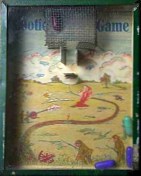 Kids played the earliest version of cooties during the 1918 Pandemic when perhaps a third of the world’s population was infected and children were particularly vulnerable. They played later versions during the last smallpox outbreak in the United States in the late 1940s. And like me, they played it in the 1950s when the polio epidemic put their cousins onto crutches and into iron lungs that kept them breathing.
 Apple to Apple